Introduction – Why You Must Know the Truth
The Truth About iPhones is something most buyers only discover after spending their money.
Before buying, people usually see:
- Beautiful ads
- Smooth YouTube reviews
- Influencers saying “best phone ever”
But very few people talk about:
- What happens after 1 year
- What ownership really costs
- Whether the iPhone fits your lifestyle
An iPhone is not just a smartphone. For many buyers, it is:
- A big financial decision
- A long-term commitment
- An entry into a closed ecosystem
This article exists to protect you from regret.
Instead of hype, this guide focuses on:
- Real-world usage
- Honest pros and cons
- Practical buying advice
If you are planning to buy an iPhone in 2026, reading this before buying can save you money, frustration, and disappointment.
Opinion + Real Experience With iPhones
Let’s start with a clear statement.
The Truth About iPhones is not that they are bad.
The truth is that they are not perfect for everyone.
People who love iPhones often say:
- “It just works”
- “It feels premium”
- “Everything is smooth”
People who regret buying iPhones often say:
- “Accessories are too expensive”
- “Battery health dropped fast”
- “I feel locked in”
Both groups are correct.
A Simple Real-Life Analogy
Owning an iPhone is like living in a luxury gated apartment.
- The environment is clean
- Security is strong
- Everything feels premium
But:
- You cannot modify much
- Maintenance is costly
- Rules are strict
If you like comfort and simplicity, you will love it.
If you like freedom and flexibility, you may feel restricted.
That is the core of The Truth About iPhones.
The Apple Brand Psychology Nobody Talks About
Apple has not just built products.
It has built trust, identity, and emotional attachment.
Why People Choose iPhones (Subconsciously)
Most buyers think they choose iPhones for specs.
In reality, many choose them because:
- Friends and family use iPhones
- Social media portrays iPhone as “premium”
- iPhones are associated with success
- Apple is seen as “safe and reliable”
None of this is accidental.
The Truth About iPhones is that Apple sells:
- Confidence
- Status
- Peace of mind
This is not wrong—but it’s important to recognize the influence before buying.
The Hidden Costs of Owning an iPhone
This is where many buyers feel shocked after purchase.
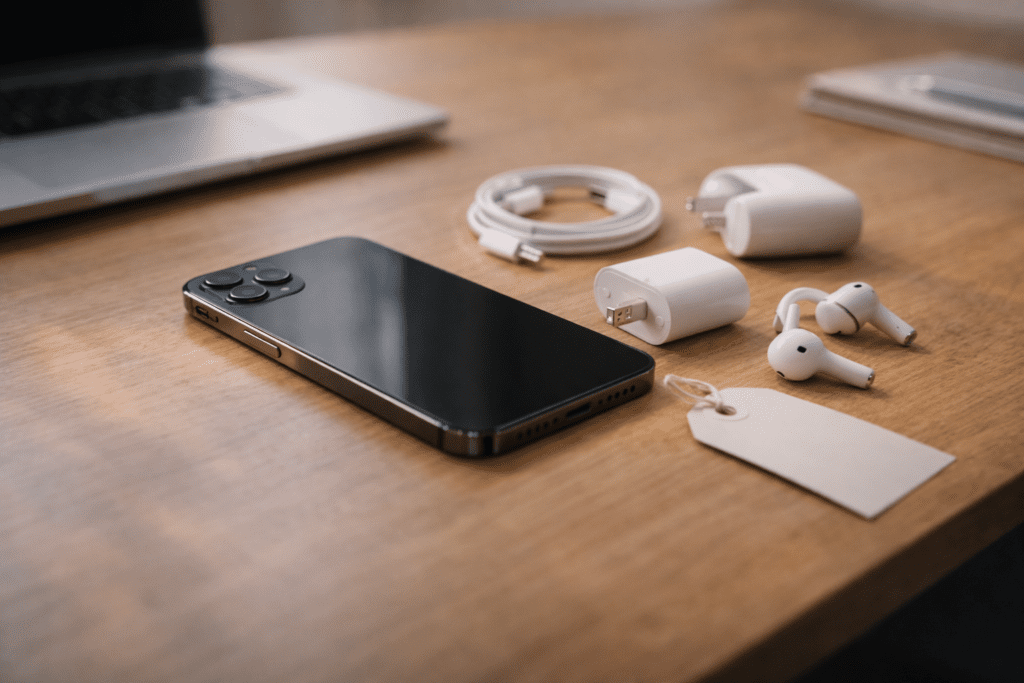
Cost #1: Charger & Accessories
- Charger not included in the box
- Original cable is expensive
- Third-party cables often wear out faster
Cost #2: iCloud Storage
iPhones push users toward cloud storage.
- Free storage is limited
- Photos and backups fill space quickly
- Monthly payment becomes normal
Cost #3: Repairs & Replacement
- Screen repairs are costly
- Battery replacement is expensive
- Genuine parts are restricted
The Real Ownership Cost
The Truth About iPhones is that the purchase price is only the beginning.
Over 3–4 years, users often spend:
- More on accessories
- More on repairs
- More on cloud subscriptions
In many cases, total ownership cost becomes 30–40% higher than expected.
Performance Truth – Do You Really Need That Much Power?
When people talk about iPhones, performance is usually the first selling point.
Apple launches every new iPhone claiming:
- “Fastest chip ever”
- “Desktop-class performance”
- “Years ahead of competition”
And yes—technically, this is true.
But here is The Truth About iPhones that nobody explains clearly:
Most users never need that level of performance.
What iPhone Performance Is Actually Used For
Let’s look at how 90% of users use their phones daily:
- WhatsApp & messaging
- Instagram, Facebook, X
- YouTube, Netflix
- Online banking & UPI
- Casual photography
For these tasks, even a mid-range phone works smoothly today.
So why does iPhone performance still matter?
Where iPhone Performance Truly Helps
iPhones shine in specific long-term scenarios:
- Longevity
iPhones stay smooth for 4–5 years because the processor is overpowered from day one. - Heavy Gaming
Games like PUBG, COD Mobile, and Genshin Impact run more consistently. - Professional Video Editing
4K video editing, exporting, and color grading are smoother. - Long Software Support
Performance helps future iOS updates run well.
The Honest Verdict on Performance
The Truth About iPhones is simple:
- If you upgrade phones every 2 years → performance advantage is mostly wasted
- If you keep phones 4–6 years → performance advantage matters a lot
Performance is not about today.
It is about how long you plan to keep the phone.
Battery Reality – The Biggest Shock for New Buyers
If there is one area where people feel disappointed later, it is battery.
What Apple Shows vs What Users Experience
Apple rarely talks about battery capacity numbers.
Instead, marketing focuses on:
- “All-day battery”
- “Optimized efficiency”
- “Smart battery management”
But The Truth About iPhones is revealed after 12–18 months of use.
Battery Health: The Silent Problem
iPhones show Battery Health Percentage—which is both good and scary.
Here’s what actually happens:
- New iPhone starts at 100%
- Drops to ~90% in first year
- Reaches 80–85% by year two
At ~80%, users start noticing:
- Faster drain
- Phone heating
- Performance throttling
Why iPhone Batteries Feel Smaller
Compared to many Android phones:
- iPhones have smaller battery capacity
- Apple prioritizes slim design
- Fast charging is intentionally slower
This results in:
- More frequent charging
- Anxiety during travel
- Battery replacement sooner
Battery Replacement Reality
Battery replacement is:
- Safe
- Effective
- But expensive
Many users delay replacement and instead:
- Carry power banks
- Reduce usage
- Upgrade phone early
That is a hidden cost strategy, whether intentional or not.
Honest Battery Verdict
The Truth About iPhones regarding battery:
- Battery is good for the first year
- Becomes average in year two
- Needs replacement or adjustment in year three
If battery life is your top priority, you must think carefully.
Camera Truth – Marketing vs Real-Life Use
Apple’s camera marketing is powerful—and partly deserved.
But let’s separate advertising claims from daily usage reality.
What iPhones Do Exceptionally Well
- Video Recording
iPhones are still industry leaders in video.- Stable footage
- Accurate colors
- Excellent microphone quality
- Social Media Optimization
Photos and videos uploaded to Instagram, YouTube, and Snapchat look better. - Natural Color Science
Photos look realistic, not overly edited.
Where Expectations Need Adjustment
- Zoom photography is average on non-Pro models
- Night photography is good, not magical
- Camera upgrades year-to-year are incremental
Many buyers expect:
“My photos will look professional automatically.”
But The Truth About iPhones is:
- Good camera ≠ good photographer
- Lighting still matters
- Composition still matters
Who Benefits Most From iPhone Cameras
iPhone cameras are perfect for:
- Content creators
- Vloggers
- Reels & Shorts makers
- Casual photography lovers
For users who:
- Rarely shoot videos
- Take occasional photos
The difference may not justify the price.
Charging & Accessories – A Daily-Life Reality Check
Charging is a daily experience, not a spec-sheet feature.
Charging Speed Truth
Compared to competitors:
- iPhones charge slower
- Apple limits fast charging deliberately
- Heat management is prioritized
This results in:
- Longer charging times
- Safer battery health
- But less convenience
Cable & Accessory Dependence
Even with USB-C adoption:
- Original cables are expensive
- Third-party quality varies
- Accessories add up over time
The Truth About iPhones is that:
Apple earns heavily after the sale, not just at purchase.
Psychological Ownership Effect – Why People Defend iPhones
An interesting truth few mention:
Once people buy an expensive iPhone, they defend their decision strongly.
This happens because:
- High cost creates emotional attachment
- Criticism feels personal
- Switching feels like admitting a mistake
This is called post-purchase rationalization.
It doesn’t mean iPhones are bad.
It means decisions become emotional, not objective.
Recognizing this helps you:
- Evaluate honestly
- Avoid blind loyalty
- Buy based on needs, not pride
iOS Software Truth – Smooth Experience, Limited Freedom
One of the biggest reasons people love iPhones is iOS.
Ask any iPhone user why they stick with Apple, and you’ll hear:
- “It’s smooth”
- “It never crashes”
- “It’s simple to use”
All of that is true.
But The Truth About iPhones is that smoothness comes with restrictions.
Why iOS Feels So Polished
iOS feels stable because:
- Apple controls hardware + software together
- Fewer device variations exist
- Updates are tested tightly
This creates:
- Consistent animations
- Predictable behavior
- Fewer random bugs
For non-technical users, this is a huge advantage.
Where iOS Starts Feeling Restrictive
After extended use, many users notice limitations such as:
- Limited home screen customization
- Restricted default app choices
- Controlled file access
- App behavior tightly monitored
Simple examples:
- You cannot freely move files like a computer
- Background apps are aggressively restricted
- System-level customization is minimal
The Truth About iPhones is that iOS is designed for simplicity, not freedom.
Who iOS Is Perfect For
iOS works best for people who:
- Want a phone that “just works”
- Don’t like tweaking settings
- Prefer a guided experience
- Value consistency over flexibility
If you enjoy control and experimentation, iOS may feel limiting over time.
Ecosystem Lock-In – Convenience That Becomes a Trap
This is one of the most important truths buyers must understand.
How the Ecosystem Pulls You In
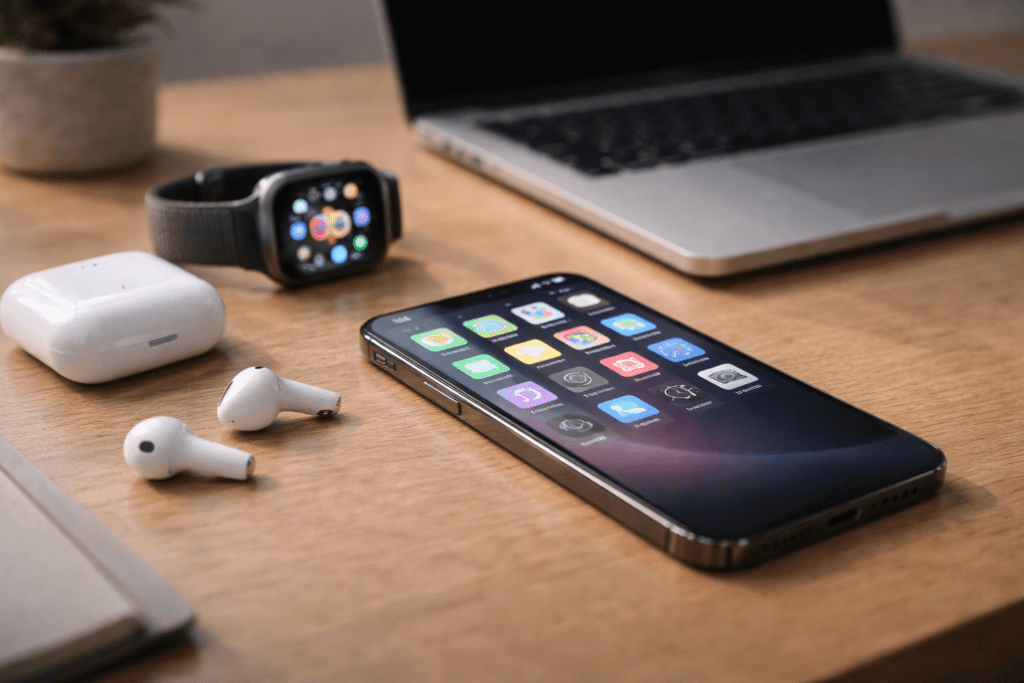
It usually starts innocently:
- You buy an iPhone
- Then AirPods (they connect instantly)
- Then an Apple Watch
- Maybe later a MacBook
Suddenly:
- Messages sync everywhere
- Calls shift between devices
- Files move effortlessly
This feels amazing.
The Hidden Cost of Convenience
Over time, this convenience creates dependence.
Leaving becomes difficult because:
- Accessories work best only within the ecosystem
- Switching breaks seamless features
- Replacement costs become high
This is The Truth About iPhones:
Apple doesn’t lock you in forcefully — it locks you in comfortably.
Is Ecosystem Lock-In Bad?
Not necessarily.
It is fantastic if:
- You plan to stay long-term
- You can afford ecosystem products
- You value smooth integration
It becomes a problem if:
- Your budget changes
- You want flexibility
- You plan to mix brands
Repairs & Right-to-Repair – The Costly Reality
This is one area where frustration builds silently.
Why iPhones Are Harder to Repair
iPhones are designed with:
- Tightly packed components
- Serialized parts
- Software pairing for hardware
This means:
- Third-party repairs are restricted
- Non-original parts may trigger warnings
- Simple fixes become complex
Real-World Repair Experience
Common scenarios users face:
- Screen cracks → expensive replacement
- Battery degrades → official replacement recommended
- Small issues → large bills
Many users end up:
- Delaying repairs
- Living with damage
- Upgrading earlier than planned
That is part of The Truth About iPhones nobody explains upfront.
Right-to-Repair Debate (Simplified)
Apple argues:
- Security & safety reasons
- Quality control
Consumers argue:
- Repairs should be affordable
- Users should own their devices
The result?
- Repairs are possible, but not friendly
Privacy & Security – Truth vs Marketing
Apple strongly promotes privacy.
You’ll often hear: The Truth About iPhones
- “iPhones don’t track you”
- “Apple cares about privacy”
- “Your data is safe”
There is truth here — but also exaggeration.
Where Apple Truly Excels
Apple does better than most competitors in:
- App permission transparency
- Limiting background tracking
- On-device processing
- Clear privacy labels
This is a real advantage.
Where Myths Begin
The Truth About iPhones is that:
- Apps still collect data
- iCloud stores personal information
- Browsing is not anonymous
- Privacy depends on user behavior
An iPhone does not automatically make you private.
Privacy improves when you:
- Adjust settings
- Limit app permissions
- Avoid shady apps
- Understand data sharing
Security vs Freedom Trade-Off
Apple’s strong security also means:
- Fewer customization options
- Restricted system access
- Controlled app ecosystem
This again comes back to the same theme:
Safety increases as freedom decreases.
Long-Term Usage Reality – What Happens After 3 Years
This is where The Truth About iPhones becomes clearest.
After 3 years of use, most users experience:
- Reduced battery health
- Storage management issues
- Desire for better camera
- Slower charging expectations
But they also experience:
- Stable performance
- Continued software updates
- High resale value
This dual reality is important.
Why Many Users Still Stay
Despite issues, users stay because:
- Phone still works reliably
- Switching feels inconvenient
- Resale value softens upgrade cost
This is why iPhones retain loyal users — not because they’re flawless, but because they’re predictable.
iPhone vs Android – The Honest, No-Fanboy Comparison
This comparison is unavoidable.
Many people don’t actually ask:
“Which phone is better?”
They ask:
“Which phone is better for me?”
That distinction defines The Truth About iPhones.
Core Philosophy Difference
iPhone philosophy
- Controlled
- Predictable
- Polished
- Long-term focused
Android philosophy
- Open
- Flexible
- Feature-rich
- Choice-driven
Neither approach is wrong — they simply serve different personalities.
Real-Life Comparison Table
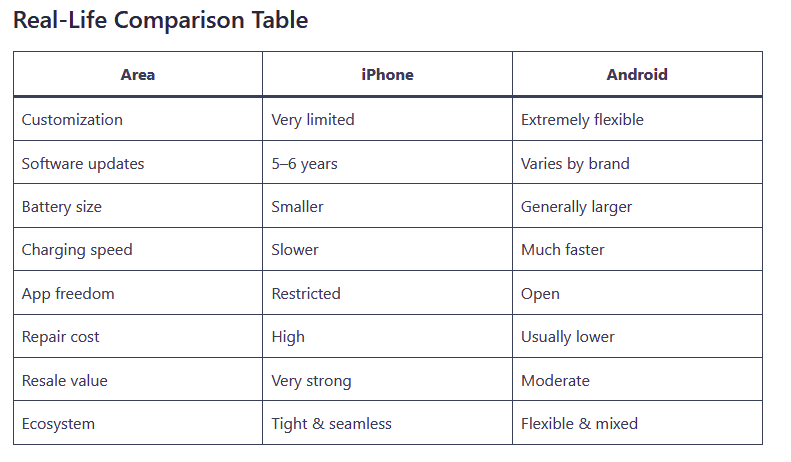
The Truth About iPhones is that Apple optimizes for long-term stability, while Android optimizes for user choice.
Who Wins in Daily Life?
- If you enjoy tweaking, changing launchers, installing custom apps, Android feels exciting.
- If you want predictability, fewer bugs, and years of support, iPhone feels comforting.
This is not about “better.”
It’s about fit.
Pros of Buying an iPhone
Let’s clearly list the real advantages, without exaggeration.
1. Long Software Support
- 5–6 years of iOS updates
- Security patches long after purchase
- Phone stays usable longer
2. Stable Performance Over Time
- No sudden lag after updates
- Apps remain optimized
- Smooth experience even after years
3. Industry-Leading Video Quality
- Best stabilization
- Accurate colors
- Excellent microphones
- Perfect for content creators
4. High Resale Value
- Older iPhones still sell well
- Upgrade cost feels lower
- Strong second-hand market
5. Ecosystem Convenience
- Seamless device interaction
- Easy for non-technical users
- Less setup frustration
These are real, tangible benefits — not marketing hype.

Cons of Buying an iPhone
Now the uncomfortable truths.
1. Expensive Accessories
- Charger sold separately
- Original cables are costly
- Accessories add up over time
2. Battery Anxiety
- Smaller batteries
- Health degrades visibly
- Replacement cost is high
3. Limited Customization
- Home screen control is basic
- Default apps are restricted
- File management is limited
4. Repair & Maintenance Cost
- Screen replacement is expensive
- Third-party repair restrictions
- Parts pairing issues
5. Ecosystem Dependence
- Switching later feels painful
- Mixed-brand setups don’t work smoothly
- Long-term commitment required
The Truth About iPhones is that they demand financial and ecosystem loyalty.
Who Should Buy an iPhone?
You should strongly consider an iPhone if: The Truth About iPhones
- You want a phone that lasts 5+ years
- You value stability over customization
- You create videos or social media content
- You dislike technical tinkering
- You already use Apple products
- You care about resale value
For these users, iPhones feel stress-free and dependable.
Who Should Avoid an iPhone
You should think twice if: The Truth About iPhones
- You enjoy customization & control
- You want maximum features for your money
- Battery life is your top priority
- You prefer fast charging
- You change phones every 1–2 years
- You dislike closed ecosystems
For these users, iPhones often feel overpriced and restrictive.
Final Verdict – Is iPhone Worth It in 2026?
Let’s answer honestly.
The Truth About iPhones is not that they are overrated —
It’s that they are not universal solutions.
iPhone is worth it if:
- You plan long-term usage
- You value reliability
- You want minimal friction
- You accept higher ownership cost
iPhone is NOT worth it if:
- You want freedom and flexibility
- You expect cutting-edge hardware value
- You dislike subscriptions & accessories
- You prefer experimentation
An iPhone is not a “smart choice” by default.
It becomes a smart choice only when it matches your mindset.
FAQs – The Truth About iPhones
Q1. Are iPhones overpriced?
Yes in terms of hardware, but long software support balances the cost.
Q2. Do iPhones slow down over time?
Performance stays stable, but battery aging affects speed.
Q3. Is iPhone good for students?
Good, but expensive. Android offers better value for tight budgets.
Q4. How long does an iPhone realistically last?
4–6 years with battery replacement.
Q5. Are iPhones safer than Android?
Generally yes, but privacy depends on user behavior.
Q6. Is switching from iPhone difficult?
Yes, once you’re deep into the ecosystem.
Q7. Should I buy an older iPhone model?
Yes, if discounted and battery health is good.
Now you know The Truth About iPhones — before spending your money.
If this guide helped you:
👉 Subscribe for more honest tech opinions
👉 Share this article with someone planning to buy an iPhone
👉 Explore our in-depth buying guides and comparisons
Smart buyers don’t follow hype.
They follow clarity, logic, and truth.