Introduction – Switching From Android to iPhone: Was It Worth It?
Switching from Android to iPhone is one of the most searched tech decisions today—and for good reason.
For years, Android dominated my daily life. Custom launchers, file managers, split screens, APK installs—everything felt open and powerful. But curiosity, peer influence, and long-term performance claims pushed me to finally switch.
This is not a comparison blog filled with specs.
This is a real experience, written after actually using an iPhone daily.
No brand bias.
No paid opinions.
Just the truth.
If you’re wondering whether switching from Android to iPhone is worth it, this blog is written exactly for you.
My Life With Android Before the Switch
Before switching, Android felt like home.
I used Android phones for years because they offered:
- Full control over the system
- Freedom to install any app
- Custom launchers & gestures
- File access like a mini computer
Android was not just a phone—it was a toolkit.
You could:
- Change how the phone looks
- Decide how apps behave
- Control notifications deeply
In short, Android felt powerful but demanding.
Why I Decided to Switch From Android to iPhone
The decision wasn’t sudden.
These questions kept coming up:
- Why do people stick to iPhones for years?
- Is the “smoothness” real or exaggerated?
- Do iPhones actually last longer?
- Is iOS really restrictive—or just simple?
Eventually, I wanted answers from experience, not YouTube reviews.
So I switched.
First 48 Hours With an iPhone – Honest Reality
The first two days were confusing, impressive, and frustrating—all at once.
What Immediately Felt Different
- No app drawer
- Icons locked to the top
- No universal back button
- Settings scattered across apps
As an Android user, this felt uncomfortable.
But at the same time…
- Animations were fluid
- Apps opened instantly
- No stutters, no lag
- UI felt calm and consistent
It felt like moving from:
A customizable machine → a refined appliance
The Biggest Shock: Android Freedom vs iPhone Discipline
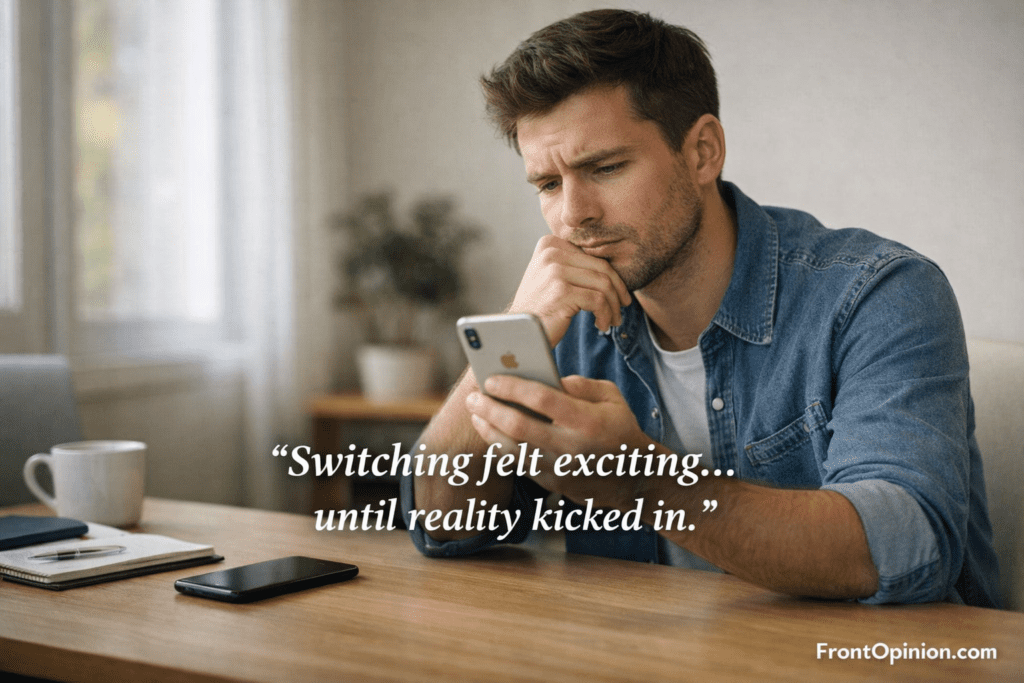
The biggest shock when switching from Android to iPhone is not the missing features—it’s the change in control. Android feels like an open playground where you decide how everything works. You customize layouts, manage files freely, and tweak the system to your liking. iPhone, on the other hand, feels disciplined. It limits choices, controls behavior, and guides you toward a specific way of using the device. At first, this feels restrictive and uncomfortable. But over time, that discipline reduces clutter, confusion, and decision fatigue. You lose freedom, but you gain consistency, stability, and mental peace.
This is the core truth about switching from Android to iPhone.
Android Philosophy
Android gives you:
- Control
- Flexibility
- Customization
But it also gives:
- Complexity
- Inconsistency
- Performance drops over time
iPhone Philosophy
iPhone gives you:
- Predictability
- Stability
- Consistency
But it takes away:
- Deep customization
- File-level freedom
- System control
Simple analogy:
Android is like owning a bike you can modify.
iPhone is like driving a premium car with rules.
Day-to-Day Usage After One Week
After about 6–7 days, something changed.
I stopped:
- Looking for missing features
- Tweaking layouts
- Fighting the system
And started:
- Trusting the phone
- Using apps more efficiently
- Not worrying about performance
This is where Apple’s ecosystem philosophy starts making sense.
The phone doesn’t ask you to customize—it asks you to use it.
App Experience: One Area Where iPhone Wins
Apps on iPhone feel: Switching from Android to iPhone
- More polished
- Better optimized
- More stable
Especially:
- Banking apps
- Camera apps
- Social media
- Productivity tools
Even when features are similar, the experience feels smoother on iPhone.
This consistency is a major reason many users never switch back.
Pros of Switching From Android to iPhone
1. Long-Term Performance Stability
Unlike many Android phones, iPhones don’t slow down quickly.
Even older models perform well because:
- Hardware + software are tightly integrated
- Fewer background processes
- Optimized updates
This is a strong long-term advantage.
2. Software Updates You Can Rely On
iPhones receive:
- 5–6 years of iOS updates
- Regular security patches
- Same update for all users
No waiting for brands or carriers.
3. Camera Consistency Over Specs
The iPhone camera is not always “best on paper,” but it is:
- Extremely reliable
- Accurate in colors
- Excellent for video
You don’t need camera knowledge to get good results.
4. Ecosystem Integration
If you use:
- AirPods
- Apple Watch
- MacBook
The experience becomes seamless.
This is where iPhone truly feels premium.
Cons of Switching From Android to iPhone (No Sugarcoating)
1. Customization Is Limited
You cannot:
- Change system behavior deeply
- Use advanced launchers
- Customize gestures freely
For Android power users, this hurts.
2. File Management Feels Restrictive
Android users will notice immediately:
- Limited access to internal files
- Sharing feels controlled
- External storage is unsupported
This feels restrictive at first.
3. Accessories Cost More
- Charger sold separately
- Original cables are expensive
- Repairs are costly
This increases overall ownership cost.
Who Should Buy an iPhone (And Who Should Avoid It)
✅ You SHOULD switch if:
- You want a phone that “just works”
- You don’t care about deep customization
- You want long-term updates
- You prefer polished apps
❌ You should NOT switch if:
- You love modifying everything
- You use APKs or modded apps
- You rely heavily on file transfers
- You want maximum value-for-money
Battery Life After Switching From Android to iPhone
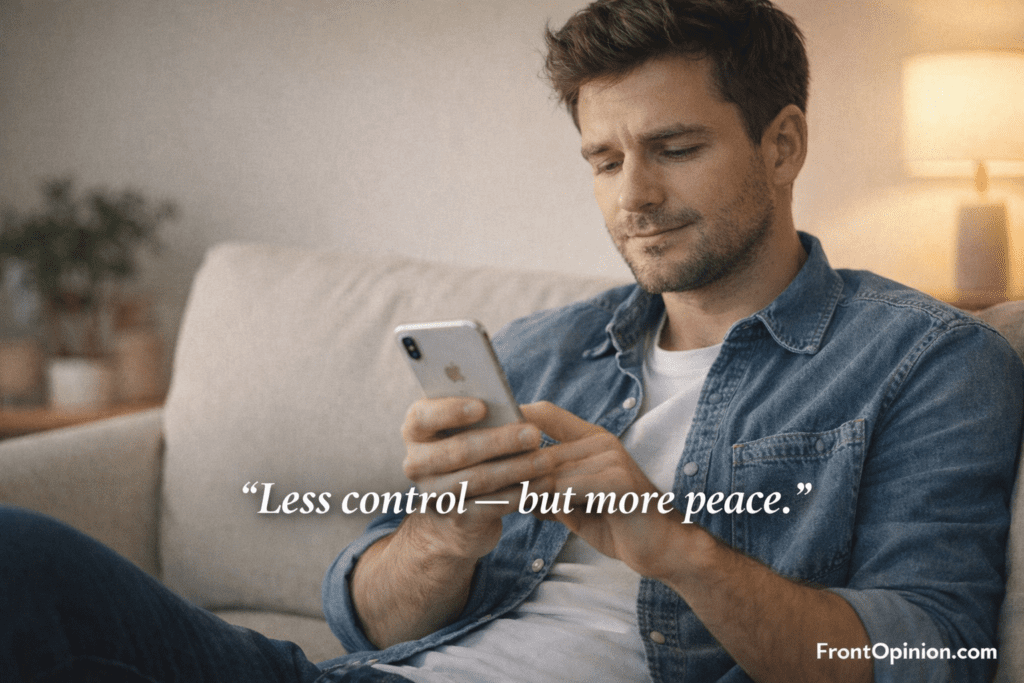
Battery life after switching from Android to iPhone feels more predictable than impressive. On Android, battery performance often depends on brand optimization, background apps, and how much you tweak settings. Some days are great, others frustrating. iPhone takes a different approach. It tightly controls background activity, limits aggressive apps, and manages power quietly. The result isn’t record-breaking battery life, but consistent day-long usage without sudden drops. You stop worrying about which app is draining power. While fast charging is slower and customization is limited, the stability makes daily battery behavior calmer and more reliable over time.
Battery life is one of the biggest questions people ask before switching from Android to iPhone.
Let me be very clear.
iPhone Battery Is Not “Magical”
But it is predictable.
On Android, battery life depends on:
- Brand optimization
- UI skin
- Background apps
- Your own tweaks
On iPhone:
- Battery behavior is controlled tightly
- Background activity is limited
- Apps follow strict rules
Real Daily Usage (Average User)
With:
- Social media
- Camera
- Calls & WhatsApp
- Browsing & YouTube
You can expect:
- One full day comfortably
- Rare sudden drain
- Consistent screen-on time
The Trade-Off
- Android gives flexibility but unpredictable drain
- iPhone gives stability but less control
If you hate managing battery settings, iPhone feels relaxing.
Charging Speed: Android Still Wins Here ⚡
This is one area where Android is clearly ahead.
- Android phones charge faster
- Many include chargers in the box
- Super-fast charging is common
iPhone:
- Slower charging
- Charger often sold separately
- Heat management prioritized over speed
So yes—if fast charging matters to you, this is a con of switching from Android to iPhone.
Notifications: The Most Underrated Shock 😵
This part surprised me the most.
Android Notifications Feel Smarter
On Android:
- Notifications are grouped better
- Quick actions are richer
- You can control behavior deeply
iPhone Notifications Feel… Different
On iPhone:
- Notifications appear cleaner
- But feel less flexible
- Notification history isn’t always obvious
Many Android users feel:
“I missed notifications on iPhone without realizing it.”
This improves over time as you adjust, but Android still handles notifications better.
Multitasking: Android Users Will Feel Restricted
If you use:
- Split screen
- Floating windows
- Picture-in-Picture heavily
Then switching from Android to iPhone will feel limiting.
iPhone Multitasking Reality
- App switching is smooth
- Background apps are controlled
- True split screen is missing (on phones)
The result?
- Less distraction
- Less flexibility
This is intentional design, but power users will notice the loss.
Gaming Performance: Surprisingly Balanced
Here’s where things get interesting.
iPhone Gaming Experience
- Extremely stable frame rates
- Less heating than expected
- Long-term performance consistency
Android Gaming Experience
- More options
- Higher refresh rate choices
- Gaming modes vary by brand
If you play casually → iPhone feels amazing.
If you tweak performance settings → Android gives more control.
Privacy: Marketing vs Reality 🔐
Apple strongly markets privacy—and to be fair, they do more than most.
What iPhone Does Better
- App Tracking Transparency
- Clear permission prompts
- Better control over background access
This is where Apple genuinely stands out.
But Don’t Assume Total Privacy
- You still use Google, Meta apps
- iCloud data exists
- Privacy ≠ invisibility
iPhone improves privacy—but doesn’t make you anonymous.
Things Nobody Warns You About (Hidden Frustrations)
Let’s talk about real frustrations after switching from Android to iPhone.
1. Simple Tasks Sometimes Take More Steps
- Clearing cache
- Managing files
- Setting default apps
These feel less direct than Android.
2. Small Restrictions Add Up
Individually, they feel minor:
- Limited ringtone control
- Default app restrictions
- Closed system behavior
Together, they can annoy Android veterans.
3. Ecosystem Lock-In Is Real
Once you start using:
- iCloud
- AirDrop
- Apple services
Leaving becomes harder.
This is convenience—but also dependency.
Opinion + Experience (Mid-Blog Reflection)
At this stage, my honest feeling was:
“I don’t love iPhone for what it lets me change,
I like it for what it removes from my mind.”
Less tweaking.
Less fixing.
Less thinking.
More usage.
More reliability.
More calm.
That’s the real shift when switching from Android to iPhone.
Using an iPhone After Several Months (Long-Term Reality)
After the excitement fades, real usage begins.
This is where switching from Android to iPhone truly proves—or fails—its value.
What Changed After 2–3 Months
Surprisingly, very little.
- Performance stayed consistent
- Apps remained smooth
- Battery degradation felt minimal
- No random lag or UI bugs
This consistency is something many Android users don’t experience unless they buy a flagship every year.
The Biggest Long-Term Advantage: Stability Over Time
Android phones often feel:
- Amazing in the first 6 months
- Slightly slower after a year
- Noticeably degraded after 2 years
iPhones feel:
- Almost the same after 1 year
- Very usable after 3–4 years
- Supported even after 5+ years
This long-term stability is a huge reason people justify the price.
Cost of Ownership: The Hidden Math 💰
Many people ask:
“Is switching from Android to iPhone worth the extra money?”
The answer depends on how you calculate cost.
Initial Cost (iPhone = Expensive)
- Phone price is high
- Charger often sold separately
- Accessories cost more
No argument here—iPhones are expensive upfront.
Long-Term Cost (iPhone = Balanced)
But over time:
- Phones last longer
- Software updates continue
- Resale value stays strong
An iPhone you buy today can still sell well after 3–4 years.
This is where Apple’s resale ecosystem works in your favor.
Resale Value: Android vs iPhone (Reality Check)
This is often ignored—but matters a lot.
Android Resale
- Drops fast
- Depends heavily on brand
- Older models lose value quickly
iPhone Resale
- Strong demand even after years
- Predictable pricing
- Easier to sell
If you upgrade phones often, this makes switching from Android to iPhone financially smarter in the long run.
Longevity: One Phone, Many Years
iPhones are designed to:
- Receive updates for years
- Run smoothly on newer iOS versions
- Maintain app compatibility
You don’t feel “forced” to upgrade.
This is a quiet but powerful benefit.
Emotional Experience: Something Nobody Talks About
This part is subtle—but real.
Android Feels Like a Tool
- You manage it
- You fix things
- You customize it
iPhone Feels Like an Appliance
- It stays out of your way
- It works quietly
- It demands less attention
Over time, this changes your relationship with the device.
You think less about the phone, and more about what you’re doing with it.
Ecosystem Lock-In: Comfort vs Control
Once you start using:
- iCloud
- AirDrop
- AirPods
- Apple Watch
Everything feels connected.
But here’s the truth:
Convenience increases — freedom decreases.
Leaving the ecosystem later feels harder.
This is not accidental.
It’s designed loyalty.
Opinion + Experience (Honest Mid-Journey Verdict)
After months of use, my honest opinion was:
“I didn’t switch because iPhone is better at everything.
I stayed because it reduced friction in my daily life.”
Less troubleshooting.
Less tweaking.
Less thinking.
That’s the real value of switching from Android to iPhone.
Pros of Switching From Android to iPhone (Long-Term View)
- Stable performance over years
- Long software support
- Excellent resale value
- Reliable camera & apps
- Strong privacy controls
Cons That Remain Even After Months
- Customization limits never disappear
- File handling remains restrictive
- Accessories remain expensive
- Ecosystem lock-in grows stronger
You don’t “get used to” these—you simply accept them.
Who Should Buy an iPhone (Long-Term Perspective)
✅ You SHOULD switch if:
- You keep phones for years
- You value stability over control
- You want predictable performance
- You prefer simplicity
❌ You should AVOID switching if:
- You love deep customization
- You change ROMs or tweak systems
- You want max specs for money
- You dislike closed ecosystems
Android vs iPhone: Not a Spec Battle, a Mindset Battle
After months of real-world usage, one truth becomes clear:
Switching from Android to iPhone is not about features.
It’s about how you want technology to behave in your life.
Most people make the wrong comparison:
- RAM vs RAM
- Camera megapixels
- Battery size
But the real difference is philosophy.
Android vs iPhone – Mindset Comparison Table
| Aspect | Android Experience | iPhone Experience |
|---|---|---|
| Control | Maximum control | Controlled simplicity |
| Customization | Extremely high | Limited but polished |
| Learning Curve | Flexible but complex | Simple but strict |
| Long-Term Speed | Can degrade | Remains consistent |
| Updates | Brand-dependent | Guaranteed for years |
| File Access | Open & flexible | Restricted |
| Ecosystem | Brand-mixed | Deep but locked |
| Resale Value | Drops faster | Holds value well |
This table alone explains why switching from Android to iPhone feels so different.
Opinion + Experience
Here is my honest, final opinion:
“I didn’t switch because iPhone is perfect.
I switched because it reduced daily friction.”
I stopped:
- Fixing lag
- Tweaking battery settings
- Worrying about updates
And started:
- Using the phone without thinking
- Trusting long-term performance
- Keeping the same device longer
That mental relief is something Android rarely prioritizes.
Pros + Cons (Final Summary)
✅ Pros of Switching From Android to iPhone
- Long-term performance stability
- 5–6 years of software updates
- Excellent app optimization
- Strong resale value
- Better privacy controls
- Reliable camera & video quality
❌ Cons You Must Accept
- Limited customization
- Restricted file management
- Slower charging
- Expensive accessories
- Ecosystem lock-in
These cons do not disappear — you either accept them or hate them.
Who Should Buy an iPhone (Crystal-Clear Answer)
✅ You SHOULD switch from Android to iPhone if:
- You keep phones for 3–5 years
- You value stability over flexibility
- You want less maintenance
- You prefer polished apps
- You already use Apple products
❌ You should AVOID switching if:
- You love deep customization
- You install APKs or modded apps
- You frequently transfer files
- You want maximum specs per rupee
- You dislike closed ecosystems
If you fall here, Android will make you happier.
Final Verdict – Switching From Android to iPhone: Was It Worth It?
Let’s answer the main question clearly.
✅ Yes, switching from Android to iPhone WAS worth it —
but only for the right type of user.
It’s worth it if:
- You want peace of mind
- You want long-term reliability
- You want fewer decisions
It’s not worth it if:
- You love control
- You enjoy tweaking
- You want freedom above all
This isn’t about better or worse.
It’s about fit.
And for me, at this stage of life —
iPhone fit better.
That’s the truth.
👉 Still confused about choosing the right smartphone?
Subscribe to FrontOpinion for real, experience-based tech opinions — not marketing hype.
FAQs – Switching From Android to iPhone (Final Set)
1. Is switching from Android to iPhone hard?
Only for the first week. Then it becomes natural.
2. Will Android users feel restricted?
Yes, especially power users.
3. Is iPhone really smoother long-term?
Yes, that’s one of its biggest strengths.
4. Is switching worth it for first-time iPhone users?
If you value simplicity, absolutely.
5. Can I switch back to Android later?
Yes — but ecosystem lock-in may make it harder.
6. Is iPhone overpriced?
Upfront yes, long-term not always.
7. Does iPhone improve productivity?
Indirectly, by reducing distractions and maintenance.