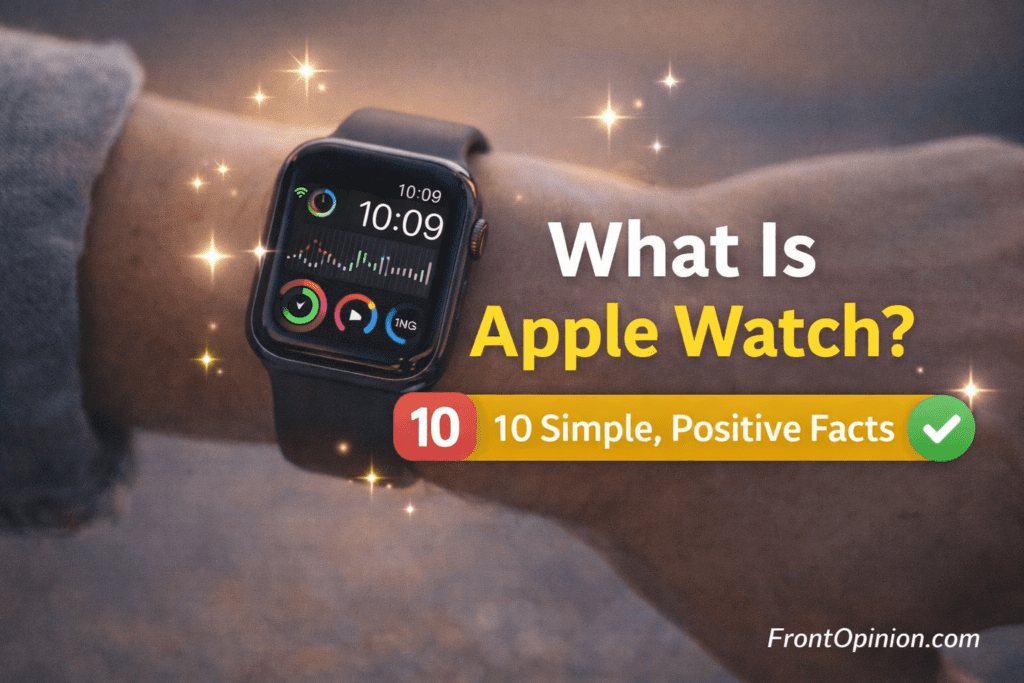
Introduction: Apple Watch Is Amazing But Not for Everyone
Apple Watch Is Amazing But Not for Everyone.
That sentence alone can upset hardcore fans and confuse first-time buyers—but it’s also the most honest starting point.
If you search online, most articles praise the Apple Watch endlessly.
They highlight features.
They show charts.
They repeat marketing phrases.
But very few talk about how it actually feels to live with one every single day.
This blog is different.
This is written from real experience, not just specs. It’s for people who don’t just want the best smartwatch, but the right watch for their lifestyle.
Because here’s the truth most reviews skip:
A product can be excellent and still be wrong for you.
That’s exactly why Apple Watch Is Amazing But Not for Everyone isn’t criticism—it’s clarity.
Opinion + Experience: My First Months With Apple Watch
When I first started wearing the Apple Watch, I noticed something immediately.
I stopped checking my phone as often.
Time, messages, calls—everything was suddenly one glance away.
That felt powerful. Efficient. Modern.
At first, the Apple Watch feels like a personal assistant that actually listens.
You move a little more.
You become aware of your steps.
You notice your heart rate during stressful moments.
It doesn’t shout.
It nudges.
And those nudges feel helpful—initially. Apple Watch Is Amazing But Not for Everyone ( Apple Watch Opinions )
The Subtle Psychological Shift No One Talks About
Here’s where Apple Watch Is Amazing But Not for Everyone starts making sense.
After weeks of usage, something changes.
You stop checking your activity…
and start being judged by it.
You didn’t walk today?
Ring incomplete.
You sat too long?
Tap on the wrist.
You ignored breathing reminders?
Another silent notification.
For some people, this is motivation.
For others, it becomes pressure.
Same feature.
Two completely different experiences.
Why Apple Watch Feels Amazing at First
Let’s be fair. The Apple Watch does many things brilliantly.
1. Instant Awareness
You don’t need deep analysis.
The watch shows information in a way your brain understands instantly.
- Color-coded rings
- Simple graphs
- Clear numbers
It makes health feel approachable, not complicated.
2. Convenience Without Effort
Messages on the wrist.
Calls without reaching your phone.
Timers while cooking.
Quick reminders during work.
This convenience becomes addictive.
But Here’s the Turning Point
After the honeymoon phase, most users fall into one of two groups:
Group 1: The Integrators
They adjust their lifestyle around the Apple Watch.
They enjoy data.
They like tracking progress.
For them, Apple Watch feels empowering.
Group 2: The Resisters
They start ignoring notifications.
They feel watched instead of supported.
They question why a watch needs daily charging.
For them, Apple Watch Is Amazing But Not for Everyone becomes personal.
Why This Isn’t a “Buy or Don’t Buy” Article
This blog won’t tell you:
- “Everyone should buy it”
- “Apple Watch is overrated”
Both are lazy conclusions.
Instead, this guide focuses on fit, not features.
Just like:
- Not everyone needs a sports car
- Not everyone enjoys social media
- Not everyone benefits from constant tracking
Not everyone benefits from an Apple Watch.
And that’s okay.
Apple Watch Is Amazing But Not for Everyone in Real Daily Life
After the first few weeks, the Apple Watch stops feeling new.
That’s when its true personality shows up.
This phase matters more than unboxing, specs, or first impressions—because most people don’t return a watch after 30 days. They live with it for years.
And that’s exactly where Apple Watch Is Amazing But Not for Everyone becomes a lived experience, not just an opinion.
The Best Part: Apple Watch Blends Into Your Routine
When the Apple Watch works for you, it does so quietly.
You don’t think:
“Wow, this watch is smart.”
You think:
“This just made my day easier.”
Examples from Real Daily Use
- Seeing a message preview while in a meeting
- Quickly declining a call without awkward phone handling
- Checking the time during workouts without stopping
- Getting reminders exactly when you need them
This is Apple’s strength: frictionless assistance.
No learning curve.
No complexity.
No manual effort.
Health Awareness: The Feature That Defines the Experience
If there’s one reason people keep wearing the Apple Watch, it’s this.
The watch doesn’t tell you what to do.
It shows you what’s happening.
What Changes Over Time
- You notice patterns in your heart rate
- You realize how little you actually move on workdays
- You become aware of poor sleep, even without deep analysis
This awareness alone can improve habits—without forcing them.
For health-focused users, Apple Watch Is Amazing But Not for Everyone becomes more like:
“Amazing for me — maybe not for others.”
But Awareness Can Turn Into Pressure
Here’s the side that rarely makes it into reviews.
At some point, the Apple Watch stops being a mirror…
and starts feeling like a scoreboard.
The Subtle Mental Shift
- Missed a workout? You know it.
- Didn’t stand enough? The watch reminds you.
- Took a rest day? The rings don’t care.
For disciplined people, this is motivating.
For relaxed personalities, it can feel intrusive.
Same device.
Different emotional outcomes.
This is exactly why Apple Watch Is Amazing But Not for Everyone isn’t a flaw—it’s a compatibility issue.
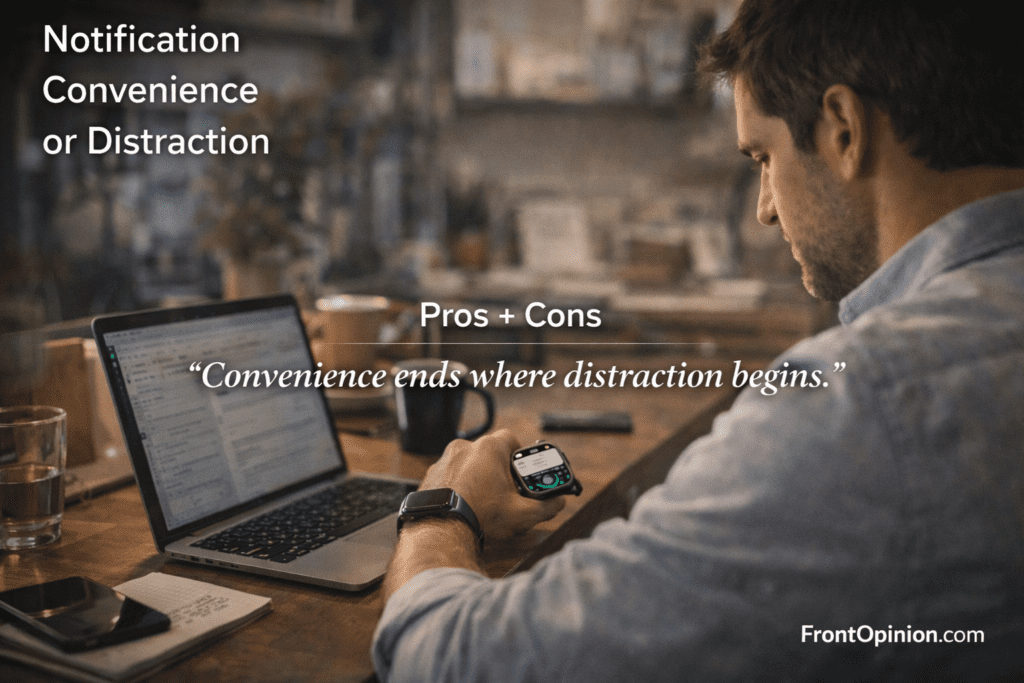
Notifications: Helpful or Distracting? Depends on You
Apple Watch notifications are brilliant—technically.
They’re fast.
They’re readable.
They’re customizable.
But emotionally? That depends entirely on the person wearing it.
For Some Users
- Fewer phone pickups
- Better focus
- Faster responses
For Others
- Constant wrist taps
- Interrupted thoughts
- Notification fatigue
If you already feel overwhelmed by digital noise, the Apple Watch may amplify that feeling rather than reduce it. ( Apple Watch Is Amazing But Not for Everyone )
Battery Life: The Daily Reality Check
This is where expectations meet reality.
Apple Watch requires daily charging.
Sometimes even more with heavy usage.
At first, it feels manageable.
After months, it becomes routine.
After years, it becomes… noticeable.
You start planning:
- When to charge
- How long it lasts
- Whether sleep tracking is worth overnight battery loss
For people who value effortless ownership, this is a dealbreaker.
For others, it’s just part of modern tech life.
Again—Apple Watch Is Amazing But Not for Everyone.
Comfort & Wearability Over Long Periods
Physically, the Apple Watch is comfortable.
Mentally, it depends.
Some users forget it’s on their wrist.
Others constantly feel it—especially during sleep.
Sleeping with a watch:
- Feels reassuring to some
- Feels restrictive to others
This is one of those things no spec sheet can explain.
You only understand it by wearing one—daily. ( Apple Watch Is Amazing But Not for Everyone )
Social & Lifestyle Impact
Apple Watch subtly changes how you interact with the world.
You:
- Check messages mid-conversation
- Glance at your wrist more often
- Become more data-aware than moment-aware
For productivity lovers, this feels efficient.
For mindful living advocates, it can feel disruptive.
Neither is wrong.
But this is why the Apple Watch isn’t a neutral object—it shapes behavior.
The Emotional Divide Between Users
After extended use, Apple Watch users usually say one of two things:
“I feel incomplete without it.”
or
“I feel relieved when I take it off.”
That emotional reaction tells you everything.
And it perfectly explains the statement:
Apple Watch Is Amazing But Not for Everyone.
Where Apple Watch Truly Shines
Let’s be clear—there are scenarios where the Apple Watch is undeniably excellent:
- Busy professionals
- Health-conscious individuals
- People who enjoy self-tracking
- Users already deep into the Apple ecosystem
In these cases, the watch feels like a smart extension of the body.
The Real Pros of Apple Watch
Let’s start with what Apple genuinely gets right.
1. Health Tracking That Feels Human, Not Technical
Apple Watch doesn’t overwhelm you with medical jargon.
Instead, it turns health into something understandable.
You don’t see complex charts first.
You see trends, colors, and simple numbers.
This matters because most people don’t want to study their health—they want to notice it.
For health-focused users, this alone makes the Apple Watch feel worth it. ( Apple Watch Is Amazing But Not for Everyone )
2. Seamless Integration With Daily Life
When paired with an iPhone, everything feels connected.
- Calls appear instantly
- Messages are readable at a glance
- Timers, reminders, alarms feel natural
There’s no friction.
No relearning.
No confusion.
This is where Apple’s ecosystem advantage shines.
3. Motivation Without Aggression
Unlike hardcore fitness devices, Apple Watch doesn’t yell at you.
It nudges:
- “You can still close your ring”
- “A short walk counts”
- “Small movement matters”
For many people, this soft encouragement actually works better than strict targets. ( Apple Watch Is Amazing But Not for Everyone )
4. Safety Features That Add Real Value
Features like:
- Fall detection
- Emergency SOS
- Heart rate alerts
…aren’t flashy, but they create peace of mind—especially for older users or people living alone.
This is one of the most underrated pros.
Now the Cons — The Ones You Feel Over Time
Here’s where Apple Watch Is Amazing But Not for Everyone becomes unavoidable.
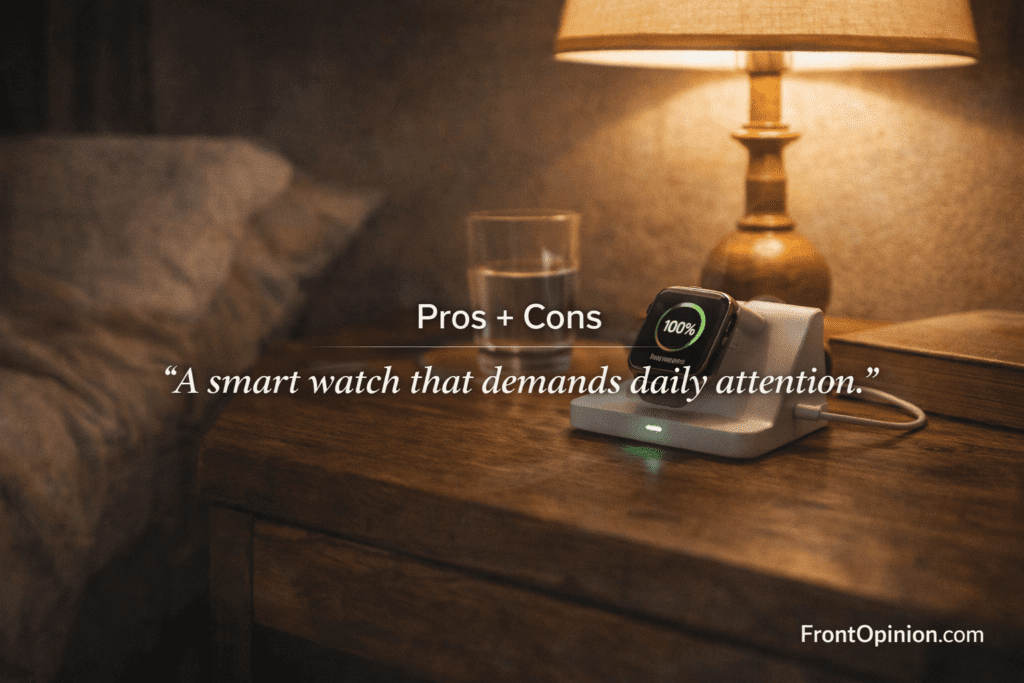
1. Battery Life Is a Lifestyle Constraint
Apple Watch doesn’t fit into life silently—it demands routine.
Daily charging is not optional.
Sleep tracking means sacrificing overnight charging.
Busy days mean battery anxiety.
Over time, the question becomes:
“Do I want to plan my day around a watch?”
For some, the answer is yes.
For others, it becomes exhausting.
2. Strong iPhone Dependency
Without an iPhone, the Apple Watch loses much of its value.
- Setup requires iPhone
- Many features depend on iOS
- Ecosystem lock-in is real
If you ever switch platforms, the watch doesn’t come with you.
This makes the Apple Watch less flexible than it appears. ( Apple Watch Is Amazing But Not for Everyone )
3. Notification Fatigue Is Real
Even when customized, notifications still arrive… on your body.
- Wrist taps interrupt thoughts
- Constant awareness becomes constant distraction
- Silence feels harder to achieve
People who already struggle with screen fatigue often realize the Apple Watch adds another layer—not removes one.
4. Emotional Burnout From Tracking
This is rarely discussed.
Over time, some users stop enjoying data and start judging themselves by it.
Missed rings feel like failure.
Rest days feel unproductive.
Numbers replace intuition.
For data-loving personalities, this is fine.
For intuitive personalities, it can feel draining. ( Apple Watch Is Amazing But Not for Everyone )
Accessory Dependency: The Hidden Cost Nobody Mentions
This deserves its own section—because it sneaks up on you.
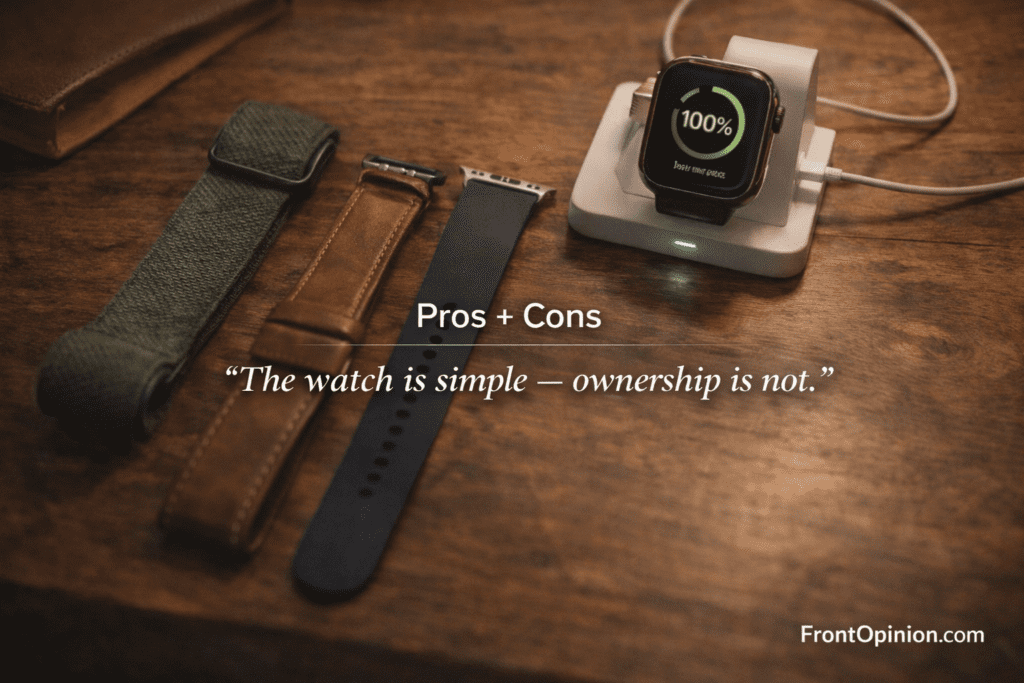
Apple Watch may look simple, but ownership rarely stays simple.
Common Add-On Purchases
- Extra bands (for work, gym, casual)
- Screen protectors
- Protective cases
- Charging stands or travel chargers
None are mandatory.
But many feel necessary over time.
The Longevity Question
Traditional watches last decades.
Fitness bands last until the battery gives up.
Apple Watch sits in between.
After 2–3 years:
- Battery health declines
- Software updates slow older models
- You start noticing limitations
It’s not built for lifelong ownership—it’s built for cycles.
That’s not bad—but it matters. ( Apple Watch Is Amazing But Not for Everyone )
Who Experiences Mostly Pros
- Tech enthusiasts
- Fitness-conscious users
- Busy professionals
- Data-driven personalities
For them, the Apple Watch feels helpful, motivating, and empowering.
Who Feels the Cons More Strongly
- Minimalists
- Notification-sensitive users
- People who dislike routines
- Those who prefer timeless accessories
For them, the Apple Watch may feel intrusive rather than supportive.
This split explains everything. ( Apple Watch Is Amazing But Not for Everyone )
Why Pros vs Cons Isn’t About Features
Most reviews compare features.
But real ownership comes down to how you feel wearing it.
Do you feel:
- Supported or monitored?
- Empowered or pressured?
- Free or interrupted?
Those answers determine whether Apple Watch becomes essential—or optional.
And that’s why Apple Watch Is Amazing But Not for Everyone remains accurate no matter how advanced the hardware becomes.
Apple Watch Is Amazing—But Not for Everyone When Money Meets Reality
By now, you understand the experience.
Now comes the most practical question:
Is the Apple Watch actually worth the money—for you?
This isn’t about whether the Apple Watch is good.
It is good.
This is about whether the cost matches the value you personally get.
And this is where many buyers get it wrong.
The True Cost of Owning an Apple Watch (Beyond the Price Tag)
Most people only consider the purchase price.
That’s a mistake.
1. Initial Purchase Cost
Depending on the model:
- Entry-level Apple Watch
- Premium finishes
- Optional cellular version
Already, the investment is significant compared to fitness bands or traditional watches.
2. Ongoing Costs Over Time
Here’s what adds up quietly:
- Battery degradation after 2–3 years
- Accessories (bands, chargers, protection)
- Potential upgrades to newer models
- Optional cellular subscription
The Apple Watch is not a one-time buy—it’s a continuing relationship.
This is a key reason Apple Watch Is Amazing But Not for Everyone financially.
What You’re Actually Paying For
When you buy an Apple Watch, you’re paying for:
- Convenience
- Awareness
- Ecosystem integration
- Lifestyle optimization
You’re not paying for:
- Longevity
- Simplicity
- Emotional timelessness
Understanding this trade-off prevents disappointment.
Cost vs Benefit: Different Users, Different Value
Let’s break it down honestly.
For a Health-Focused User
Benefits:
- Continuous health awareness
- Gentle activity motivation
- Safety reassurance
Verdict: High value
For a Busy Professional
Benefits:
- Fewer phone interruptions
- Faster interactions
- Better time awareness
Verdict: Strong value
For a Casual User
Benefits:
- Occasional convenience
- Basic fitness tracking
Verdict: Questionable value
For a Minimalist
Benefits:
- Almost none
Verdict: Low value
The Apple Watch rewards engagement.
If you don’t engage, you won’t extract value.
Accessory Dependency: Cost That Creeps In Slowly
No one plans to buy accessories.
They just… happen.
- One band for work
- One band for workouts
- One charger for travel
Each purchase feels small.
Together, they raise the total cost significantly. ( Apple Watch Is Amazing But Not for Everyone )
Who Should Buy the Apple Watch
You should confidently buy an Apple Watch if:
- You use an iPhone daily
- You care about health insights
- You enjoy data and trends
- You like gentle reminders
- You don’t mind daily charging
- You see tech as a lifestyle tool
For these users, Apple Watch doesn’t feel expensive—it feels useful.
Who Should Avoid the Apple Watch
You should avoid the Apple Watch if:
- You hate charging devices frequently
- You feel stressed by notifications
- You prefer analog or timeless design
- You don’t care about health metrics
- You want a “set it and forget it” watch
For these users, Apple Watch Is Amazing But Not for Everyone becomes a warning sign.
Apple Watch vs Fitness Bands: The Real Difference
Fitness bands:
- Longer battery life
- Lower cost
- Focus on fitness only
- Minimal distraction
Apple Watch:
- More features
- More interaction
- More responsibility
- More cost
If you want simplicity, fitness bands win.
If you want integration, Apple Watch wins.
Apple Watch vs Traditional Watches
Traditional watches offer:
- Emotional value
- Longevity
- No charging
- Zero distraction
Apple Watch offers: ( Apple Watch Is Amazing But Not for Everyone )
- Awareness
- Convenience
- Adaptability
- Technology-first experience
This isn’t about better or worse—it’s about what you value more.
The Identity Question
Ask yourself this:
Do I want my watch to reflect who I am
or what I track?
Apple Watch reflects behavior.
Traditional watches reflect personality.
That single question can decide everything.
Why Many Users Eventually Take Breaks
Even long-term Apple Watch users often: ( Apple Watch Is Amazing But Not for Everyone )
- Take breaks
- Switch wrists
- Remove it during vacations
Not because the watch fails—but because constant tracking isn’t always welcome.
This again proves the central idea:
Apple Watch Is Amazing But Not for Everyone.
Apple Watch Is Amazing But Not for Everyone: The Truth After Long-Term Use
After breaking down the experience, the pros and cons, the costs, and the buyer fit, one thing becomes very clear:
The Apple Watch is not a mistake.
But it’s also not a universal solution.
That’s why the statement Apple Watch Is Amazing But Not for Everyone remains true—even in 2025, even with better hardware, even with smarter software.
This final section ties everything together—without hype, without fear, and without pressure.
Conclusion (Opinion + Experience)
Let’s say this plainly.
The Apple Watch does exactly what it promises:
- It increases awareness
- It integrates seamlessly with iPhone
- It nudges you toward healthier habits
- It makes daily interactions faster
But it also does something Apple never markets:
👉 It changes how you relate to time, data, and yourself.
For some people, that change feels empowering.
For others, it feels unnecessary—or even tiring.
Neither reaction is wrong.
The One Question That Decides Everything
Before buying an Apple Watch, ask yourself this single question:
Do I want more awareness in my daily life—or less?
If your answer is:
- “More” → Apple Watch feels meaningful
- “Less” → Apple Watch feels intrusive
This question matters more than:
- Processor speed
- Display brightness
- New features
Because the Apple Watch isn’t just worn—it’s experienced.
Who It’s Truly Best For
The Apple Watch is best for people who:
- Enjoy tracking progress
- Appreciate gentle reminders
- Live inside the Apple ecosystem
- Don’t mind daily charging
- See technology as a lifestyle enhancer
For these users, the Apple Watch becomes:
“I didn’t know I needed this—until I had it.”
Who Should Honestly Avoid It
You should avoid the Apple Watch if you:
- Value simplicity over features
- Prefer timeless accessories
- Dislike constant digital nudges
- Want long battery life without planning
- See watches as emotional objects, not tools
For these users, the Apple Watch doesn’t fail—it just doesn’t fit.
And that’s exactly why Apple Watch Is Amazing But Not for Everyone is a responsible conclusion, not a negative one.
A Note on “Missing Out”
Many people buy the Apple Watch because they fear missing out.
But here’s the truth:
You don’t miss anything by not wearing one.
You gain something only if it fits your mindset.
Technology should serve your life—not define it.
Frequently Asked Questions (FAQs)
1. Is Apple Watch worth buying in 2025?
Yes, if you value health awareness, convenience, and iPhone integration. Otherwise, it may feel unnecessary.
2. Can Apple Watch replace a smartphone?
No. It complements the phone but depends heavily on it.
3. Is Apple Watch good for non-fitness users?
Partially. Fitness and health tracking are its strongest benefits.
4. How long does Apple Watch last realistically?
Most users feel satisfied for 2–4 years before battery and software limitations appear.
5. Is Apple Watch better than a fitness band?
Only if you want deeper integration and more interaction. Fitness bands are better for simplicity.
6. Does Apple Watch become distracting over time?
For some users, yes—especially those sensitive to notifications.
7. Is Apple Watch a necessity or a luxury?
It’s a luxury convenience, not a necessity.
Clear & Honest Conclusion
So, is the Apple Watch worth it?
Yes—if it aligns with who you are.
No—if it doesn’t.
The smartest decision isn’t buying the most popular watch.
It’s buying the watch that quietly fits into your life without friction.
And that’s the final, honest takeaway:
Apple Watch Is Amazing But Not for Everyone.