Introduction: The Honest Truth No One Talks About
Why I stopped wearing my Apple Watch wasn’t because it failed, broke, or became outdated. It happened quietly—over time—through daily use. What started as a helpful smartwatch slowly became something I felt I needed to check, trust, and obey. That realization changed everything.
This Is Not an Apple Watch Review
Before we go any further, let me make one thing clear.
This is not a technical review.
This is not a comparison chart.
This is not an “Apple Watch is bad” article.
I actually liked my Apple Watch.
This is my personal experience story—written after wearing it daily, relying on it, trusting it, and eventually deciding to stop.
If you’re looking for specs, you can find those anywhere.
If you’re looking for what it feels like to live with one, keep reading.
Why I Bought an Apple Watch in the First Place
Like most people, I didn’t buy it impulsively.
I had reasons:
- I wanted to be more active
- I wanted to track my health
- I liked the idea of quick notifications
- Everyone around me seemed to have one
It felt like a smart upgrade—not a luxury.
At first, it delivered exactly what it promised.
I walked more.
I stood up more.
I checked my phone less.
Honestly, the first few weeks were exciting.
When we feel Everything Right
During the early days, the Apple Watch feels magical.
- Rings closing feels rewarding
- Step counts feel motivating
- Heart rate tracking feels reassuring
- Silent alarms feel futuristic
I remember thinking:
“Why didn’t I buy this earlier?”
And that’s where most reviews stop.
But real life doesn’t.
When a Helpful Tool Slowly Becomes a Habit
Here’s the part no one warns you about.
At some point, the watch stops being something you use
and starts being something you check.
Not consciously.
Not intentionally.
It just… happens.
You glance at it:
- During conversations
- While walking
- Before sleeping
- Immediately after waking up
Not because it buzzed—because you expect it to.
That’s where the shift began.
The First Subtle Sign Something Was Off
One afternoon, I was working quietly.
No stress.
No rush.
No health issues.
Then my wrist vibrated.
“Time to stand.”
I was already standing.
That moment felt small—but it stuck with me.
I realized I wasn’t listening to my body anymore.
I was listening to my watch.
That was the first crack.
Data Is Useful — Until It Replaces Intuition
Let’s be clear: data itself isn’t bad.
But constant data changes behavior.
Instead of asking:
- “Do I feel tired?”
I started asking: - “What does my watch say?”
Instead of noticing:
- “I slept okay”
I checked: - “Sleep score: 67”
Slowly, quietly, I outsourced awareness.
That’s a big reason why I stopped wearing my Apple Watch later on.
The Emotional Side No One Mentions
Most reviews talk about:
- Battery life
- Display brightness
- Health sensors
Almost none talk about emotional impact.
Here’s what I felt over time:
- Slight pressure to “perform”
- Mild guilt on lazy days
- Anxiety over health stats
- Constant low-level alerts
Not panic.
Not stress.
Just noise.
And noise adds up.
Notifications: The Real Problem Isn’t Quantity
People often say:
“Just turn off notifications.”
I did.
But even filtered notifications change behavior.
A vibration on your wrist is more intimate than a phone buzz.
It interrupts thoughts.
It breaks focus faster.
Your brain treats it as urgent—even when it isn’t.
That’s when I realized something important:
The Apple Watch isn’t distracting because it’s noisy.
It’s distracting because it’s always with you.
The Psychological Shift I Didn’t Expect
Here’s the honest part.
The watch made me feel:
- Productive on “good” days
- Slightly disappointed on “bad” days
Even rest started feeling measured.
That’s not how rest should feel.
This internal pressure—not Apple’s fault—was mine.
But the device amplified it.
That realization planted the seed for why I stopped wearing my Apple Watch completely.
Mac Long-Term Review: 9 Ultimate Truths on Whether It Ages Better Than Windows Laptops
This Isn’t Regret — It’s Awareness
I don’t regret buying it.
In fact:
- It improved my activity habits
- It made me more health-aware
- It helped build routines
But once habits are built, constant tracking can become unnecessary—or even counterproductive.
A tool should support life, not supervise it.
Stepping Back and Looking at the Apple Watch Objectively
After PART 1 (emotion + awareness) and PART 2 (daily experience), this is where logic enters the room.
Because once emotions settle, a fair question remains:
“Was the Apple Watch actually worth it for me?”
To answer that honestly, we need to separate:
- What the Apple Watch does well
- What it quietly costs
- Who benefits most—and who doesn’t
Only then does why I stopped wearing my Apple Watch make complete sense.
The Apple Watch Pros (Let’s Be Fair)
Before listing any downsides, it’s important to acknowledge what the Apple Watch does exceptionally well.
Ignoring this would be dishonest.
1. Health & Safety Features Are Genuinely Valuable
Heart rate monitoring
Irregular rhythm alerts
Fall detection
Emergency SOS
These aren’t gimmicks.
For many users—especially older adults or those with health conditions—these features can be life-saving.
That alone makes the Apple Watch worth considering.
2. Fitness Tracking Is Among the Best
The activity rings are simple, visual, and motivating.
They work because:
- They’re easy to understand
- They reward consistency
- They gamify movement
For beginners especially, this structure helps build habits.
Even I benefited from this early on.
3. Seamless Integration With the Apple Ecosystem
If you already use an iPhone, the experience feels smooth.
Messages sync instantly.
Calls are easy.
Apps behave predictably.
This polish is something Apple consistently gets right.
4. Convenience Is Real
Silent alarms
Quick replies
Timer on the wrist
Quick glance information
These save small amounts of time—but repeatedly.
That convenience adds up.
The Cons That Slowly Changed My Mind
Here’s where experience matters more than specs.
These aren’t problems you notice on day one.
They appear after months of daily use.
1. Mental Dependency (The Biggest Hidden Cost)
This isn’t discussed enough.
The Apple Watch encourages:
- Constant checking
- Validation through numbers
- External cues instead of internal signals
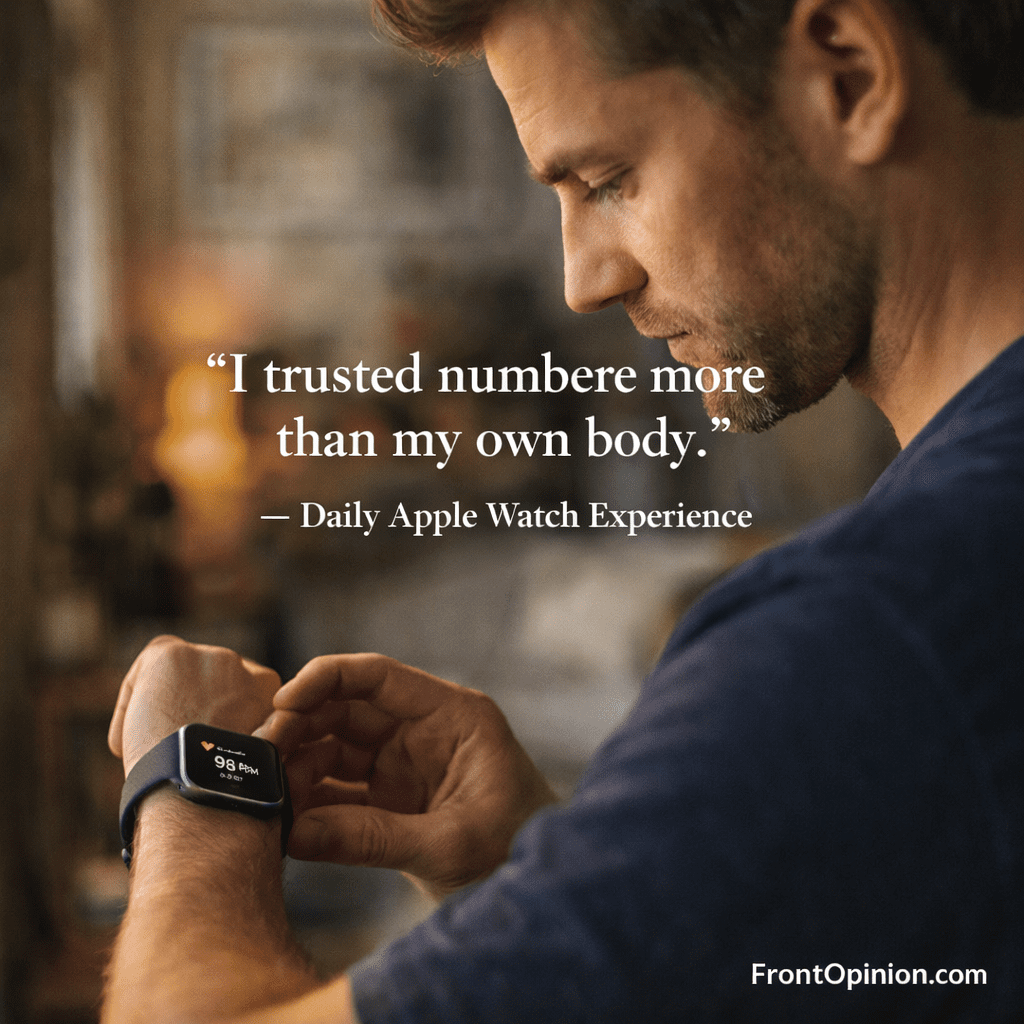
Over time, I trusted my watch more than my body.
That subtle dependency is the core reason why I stopped wearing my Apple Watch.
2. Notification Fatigue
Even filtered notifications interrupt flow.
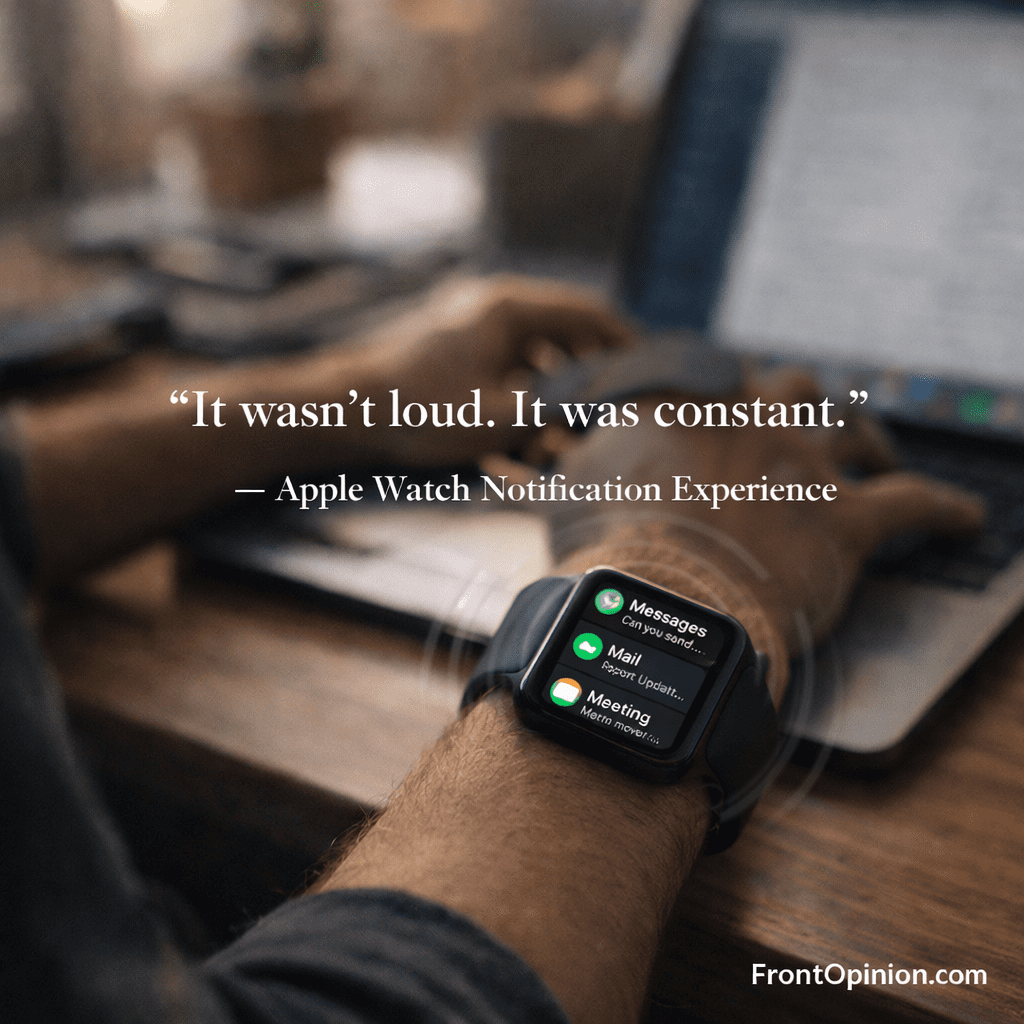
A wrist vibration feels more urgent than a phone buzz.
It’s not about quantity.
It’s about proximity.
That closeness made it harder to disconnect—even briefly.
3. The Illusion of Productivity
Closing rings feels productive.
But productivity isn’t always measurable.
Some of the best days—creative days, reflective days—don’t score well on a watch.
The device unintentionally favors movement over stillness.
That bias matters.
4. Battery Life Dictates Behavior
The watch needs frequent charging.
That creates:
- Anxiety before sleep
- Planning around battery
- Frustration when forgotten
A dead Apple Watch feels useless—because it is.
That dependency bothered me more than expected.
Accessory Dependency: The Part No One Mentions
Buying the Apple Watch is only step one.
Sooner or later, you’ll likely buy:
- Extra bands (sports, casual, formal)
- Screen protectors
- Charging stands
- Portable chargers
- Replacement straps
Individually, these seem minor.
Sooner or later, you’ll likely buy: Amazon- Extra bands (sports, casual, formal)
- Screen protectors
- Charging stands
- Portable chargers
- Replacement straps
Together, they create an ecosystem of spending.
This accessory dependency isn’t forced—but it’s encouraged.
That ongoing investment became part of why I stopped wearing my Apple Watch long-term.
Cost vs Benefit Analysis
Let’s break this down honestly.
Initial Cost
High—especially for newer models.
Ongoing Costs
- Accessories
- Potential replacements
- Upgrades every few years
Benefits
- Health insights
- Motivation
- Convenience
Hidden Costs
- Mental load
- Attention fragmentation
- Habit dependency
If you thrive on data, the benefits outweigh the costs.
If you value simplicity, the balance shifts.
Is the Apple Watch “Too Much” for Some People?
Yes—and that’s okay.
Not every powerful tool fits every lifestyle.
The Apple Watch assumes:
- You want constant metrics
- You’re okay with regular charging
- You enjoy quantified living
If that’s not you, friction appears.
That friction doesn’t mean the device is bad.
It means the match isn’t right.
Comparing Value Over Time
In the beginning:
- Value felt high
- Excitement was strong
After a year:
- Use became routine
- Benefits plateaued
Eventually:
- Costs (mental + financial) became more visible
- Benefits felt repetitive
That curve explains why I stopped wearing my Apple Watch better than any single feature complaint.
A Hard Truth About “Smart” Devices
Smart devices don’t just adapt to us.
We adapt to them.
Schedules shift.
Habits change.
Expectations form.
The Apple Watch subtly trains behavior.
That can be helpful—or restrictive—depending on the person.
For me, it crossed from helpful to controlling.
This Is Not an Anti-Apple Watch Argument
Let me be very clear.
The Apple Watch is:
- Technically impressive
- Well-designed
- Genuinely useful for many people
Stopping wasn’t a rejection.
It was a recalibration.
Sometimes, stepping away from a good tool is the healthiest choice.
Before Giving a Verdict, Let’s Be Practical
By now, you know why I stopped wearing my Apple Watch personally.
But this isn’t about convincing you to stop—or start.
It’s about helping you decide honestly, based on your personality, lifestyle, and mindset.
Because the truth is simple:
👉 The Apple Watch is not for everyone.
👉 And that doesn’t make anyone wrong.
Who the Apple Watch Is BEST For
Let’s start with people who will genuinely benefit.
1. People Who Need External Motivation
If you struggle with:
- Consistency
- Movement habits
- Daily routines
The activity rings can be powerful.
They provide:
- Visual accountability
- Gentle pressure
- Daily structure
For many, that’s exactly what’s needed.
2. Health-Conscious Users
Heart rate tracking
Activity monitoring
Emergency features
For users who want awareness, not obsession, the Apple Watch can be extremely helpful.
Especially if you’re just starting to care about health data.
3. Busy Professionals Who Value Convenience
If your day involves:
- Frequent calls
- Messages
- Timers
- Quick alerts
Wrist-level convenience saves time.
For some people, that convenience outweighs the downsides.
4. Apple Ecosystem Loyalists
If you already live inside the Apple ecosystem, the Apple Watch feels natural.
It integrates smoothly.
It behaves predictably.
It “just works.”
That matters.
Who Should Seriously THINK Twice Before Buying
This section matters just as much.
1. People Who Value Mental Calm Over Metrics
If you enjoy:
- Quiet routines
- Intuitive living
- Fewer screens
The Apple Watch may feel intrusive over time.
That’s exactly why I stopped wearing my Apple Watch.
2. Anxiety-Prone or Overthinking Personalities
If you already tend to:
- Overanalyze
- Worry about numbers
- Seek reassurance
Constant health data can increase anxiety instead of reducing it.
More data doesn’t always mean more peace.
3. Minimalists
If you prefer:
- Fewer devices
- Simpler routines
- Less charging, less managing
A smartwatch can feel like unnecessary complexity.
4. People Seeking Digital Detox
If your goal is to:
- Reduce screen time
- Be more present
- Reconnect with offline life
A smartwatch works against that goal.
Even subtle alerts keep you digitally tethered.
What I Genuinely Miss About the Apple Watch
Stopping doesn’t mean forgetting.
There are things I miss.
Silent Alarms
Waking up without sound was genuinely nice.
Emergency Confidence
Knowing help is one tap away brings reassurance.
If those features appeal to you, the Apple Watch SE is the most affordable way to get them — without overpaying for features you may not use.
Occasional Fitness Tracking
For short phases, tracking activity can be motivating.
Quick Glances
Checking time or weather without pulling out a phone was convenient.
But here’s the key:
I miss features, not the constant presence.
What I Don’t Miss At All
Let’s be honest.
I don’t miss:
- Charging anxiety
- Ring guilt
- Wrist vibrations
- Sleep score pressure
- Feeling monitored by my own data
Life without those feels lighter.
The Accessory Dependency Reality
One more important reminder.
Owning an Apple Watch rarely stays simple.
Sooner or later, you’ll likely buy:
- Extra bands
- Screen guards
- Charging stands
- Replacement accessories
That ongoing dependency isn’t a deal-breaker—but it’s real.
It becomes part of the experience.
Frequently Asked Questions (FAQs)
1. Why did you personally stop wearing your Apple Watch?
Because it created mental noise and dependency instead of long-term peace.
2. Is the Apple Watch bad for health?
No. It’s actually very good—when used mindfully.
3. Do you regret buying the Apple Watch?
Not at all. It helped me build better habits initially.
4. Can you live a healthy life without a smartwatch?
Absolutely. Awareness doesn’t require constant tracking.
5. Would you recommend the Apple Watch in 2026?
Yes—but only for people who genuinely benefit from data-driven motivation.
6. Is stopping a smartwatch a step backward?
No. Sometimes it’s a step toward balance.
7. Will you ever wear it again?
Possibly—temporarily. But not as a permanent daily device.
Conclusion
So, why I stopped wearing my Apple Watch comes down to one clear realization:
A tool that constantly measures your life can quietly start controlling it.
The Apple Watch is powerful.
It’s well-designed.
It’s genuinely helpful—for the right person.
But for me, the cost wasn’t money.
It was attention.
And attention is more valuable than any metric.